CHAPTER 1: NUMBER

Real numbers: A number that lies on the number line
Natural numbers: used for counting purposes
Whole numbers: Natural numbers including 0
Integer: Both positive and negative whole number
Prime number: A number divisible only by itself and one (Note: 1 is not a prime number)
Cube number: A rational number multiplied by itself three times
Common factors: Common divisers of a number
Common multiples: Multiples of two or more numbers that are the same.
Surds: Numbers that cannot be squared/evaluated properly.
Rational numbers: can be written as a fraction
Irrational numbers: cannot be written as a fraction
Finding the nth term
Linear Sequence
The nth term of a sequence is always written in the form an + b
where a = the difference to get from one term to the next and b = (first term – a)
e.g. 6, 11, 16, 21, …For this sequence a = 5, b = 6 – 5
So the formula is nth term = 5n + 1
Quadratic sequences
Where a pattern in the members of a sequence is in the second level difference between the terms.
General equation: 𝑎𝑛2 + 𝑏𝑛 + 𝑐
Cubic sequences
Where a pattern in the members of a sequence is in the third level difference between the terms.
General equation: 𝑎𝑛3 + 𝑏𝑛2 + 𝑐𝑛 + d
Approximation and Estimation
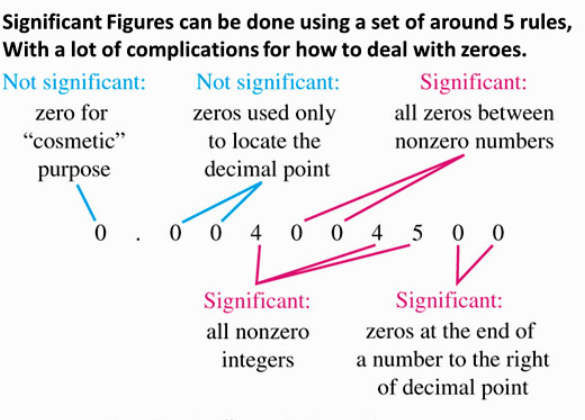
Significant Figures Rules
Upper and lower bounds
- Given the accuracy to which a figure is given to, the original value which the arrived value is reached can be found.
- If 5.4 to correct to 2 d.p, the original number could be anywhere between 5.35 to 5.45. Therefore:
- Upper Bound of 5.4= 5.45
- Lower Bound of 5.4= 5.35
Standard Form
Any number can be expressed in standard form if written in this format:
𝐴 × 10n 𝑠𝑢𝑐ℎ 𝑡ℎ𝑎𝑡 1 ≤ 𝑛 < 10
for example,
Ratios and Proportions
Ratios are used to show how things are shared and can be fully simplified just like fractions.
For example, the necklace in the image has a pattern of two red beads for every three yellow beads as 6: 9 = 2:3
Currency Exchange
New Exchanged Amount = amount x (New rate/Old rate)
Map Scales
Using proportion to work out map scales
1km = 1000m 1m = 100cm 1cm = 10mm
Some scales are given as ratios and are displayed like this 1:500. This means that each centimetre as measured is equal to 500 cm in real life. A scale of 1:20 000 would mean that 1 cm is actually equivalent to 200 m.
For Example:

Percentages
A percentage is a proportion that shows a number as parts per hundred, one way of expressing numbers that are part of a whole. It can also be written as fractions or decimals. 50% can also be written as a fraction, or a decimal, 0.5. They are all exactly the same amount.
Percentage Increase and Decrease
[(New value – Original value)/ Original Value] x 100
Simple interest:
𝐼 = 𝑃𝑅𝑇/ 100
𝑃 = 𝑃𝑟𝑖𝑛𝑐𝑖𝑝𝑎𝑙, 𝑅 = 𝑅𝑎𝑡𝑒 𝑜𝑓 𝐼𝑛𝑡𝑒𝑟𝑒𝑠𝑡 (𝑎𝑠 𝑎 𝑛𝑢𝑚𝑏𝑒𝑟), 𝑇 = 𝑃𝑒𝑟𝑖𝑜𝑑 𝑜𝑓 𝑇𝑖𝑚𝑒
Compound interest:
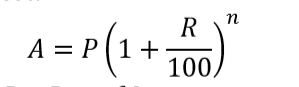
𝑃 = 𝑃𝑟𝑖𝑛𝑐𝑖𝑝𝑎𝑙, 𝑅 = 𝑅𝑎𝑡𝑒 𝑜𝑓 𝐼𝑛𝑡𝑒𝑟𝑒𝑠𝑡 as a number, 𝑛 = 𝑃𝑒𝑟𝑖𝑜𝑑 𝑜𝑓 𝑇𝑖𝑚𝑒
Speed, Distance & Time




Units of speed: km/hr, m/s
Units of distance: km /m
Units of time: hr/ sec
Algebra
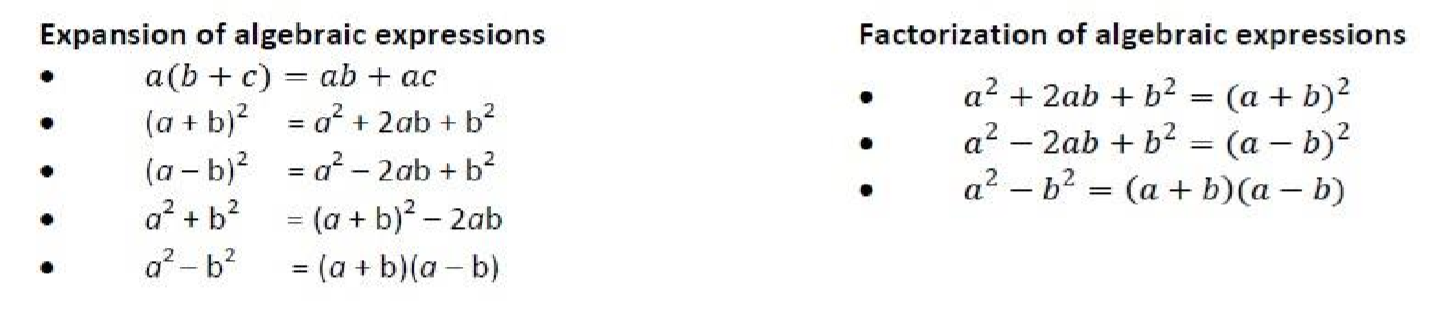
Factorisation
Common factors:
3a2 + 6a
3a(a + 2)
Difference of two squares:
25 − a2
(5 + a)(5 − a)
Group factorization:
4𝑑 + 𝑎𝑐 + 𝑎𝑑 + 4𝑐
4(𝑑 + 𝑐) + 𝑎(𝑐 + 𝑑)
Trinomial:
𝑥2 + 14𝑥 + 24
𝑥2 + 12𝑥 + 2𝑥 + 24
𝑥(𝑥 + 12) + 2(𝑥 + 12)
(𝑥 + 2)(𝑥 + 12)
Full square:
𝑥2 + 2𝑥𝑦 + 𝑦2
𝑥2 + 𝑥𝑦 + 𝑥𝑦 + 𝑦2
𝑥(𝑥 + 𝑦) + 𝑦(𝑥 + 𝑦)
(𝑥 + 𝑦)(𝑥 + 𝑦)
(𝑥 + 𝑦)2
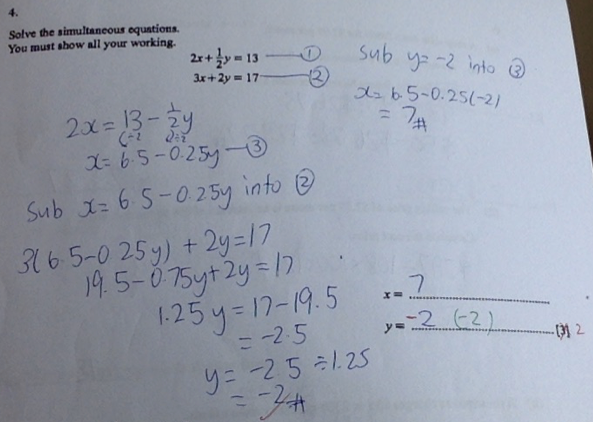
Simultaneous Equations
Simultaneous linear equations can be solved either by substitution or elimination
Substitution
Step 1: obtain an equation in one unknown and solve this equation
Step 2: substitute the results from step 1 into the linear equation to find the other unknown
Elimination:
𝟐𝒂 + 𝒃 = 𝟏𝟎
𝟐𝒃 + 𝒂 = 𝟏𝟏
2𝑎 + 𝑏 = 10
2(𝑎 + 2𝑏) = 11(2)
2𝑎 + 𝑏 = 10
2𝑎 + 4𝑏 = 22
2𝑎 + 𝑏 − (2𝑎 + 4𝑏) = 10 − 22
𝑏 = 4
2𝑎 + 4 = 10
∴ 𝑎 = 3
Note: A solution to a system of two linear equations may be interpreted graphically as a point of intersection between the two line
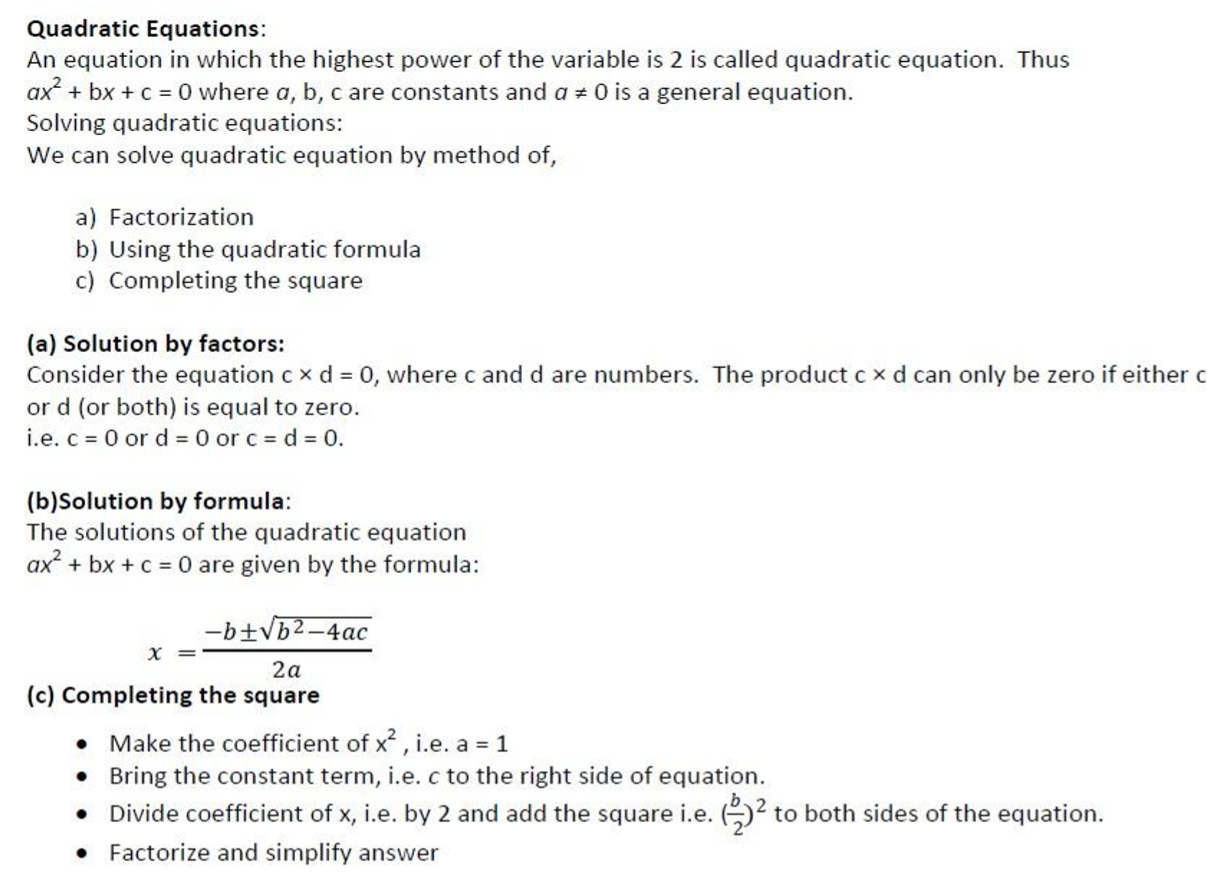
Quadratic Equations
Nature of Roots
b^2 −4ac > 0 ⇔ two real and different roots
b^2 −4ac = 0 ⇔ two real and equal roots
b^2 −4ac < 0 ⇔ no real roots
b^2 −4ac ≥ 0 ⇔ the roots are real
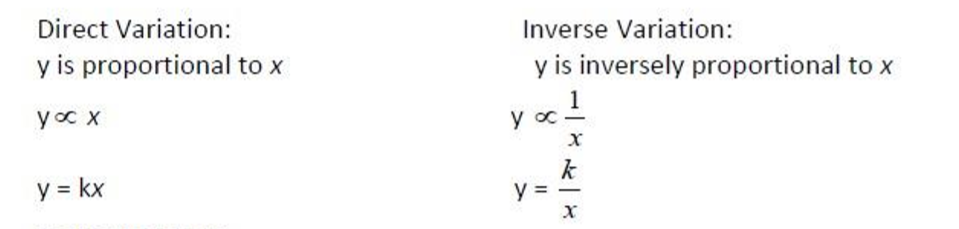
Variation
Indices


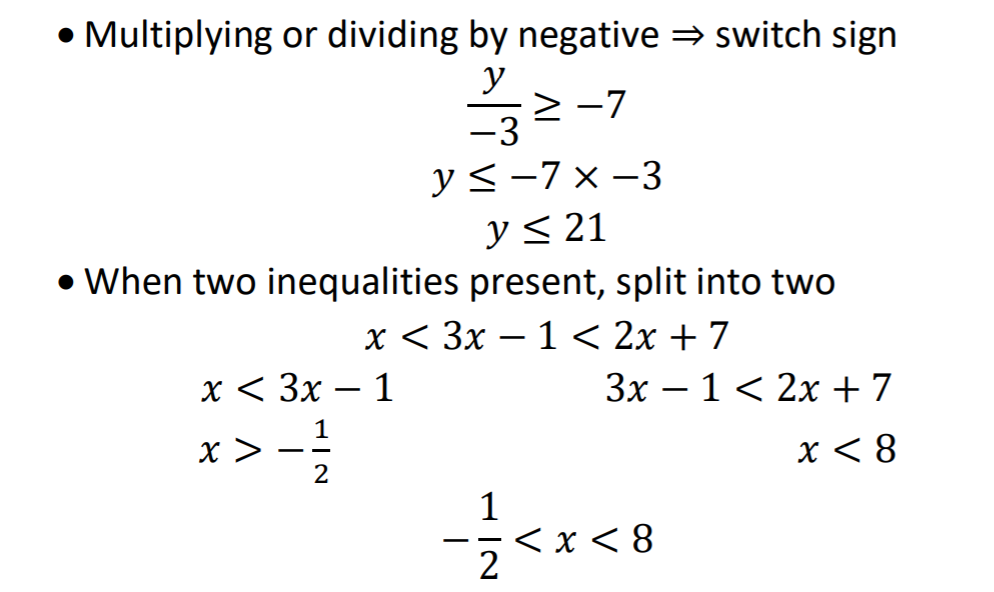
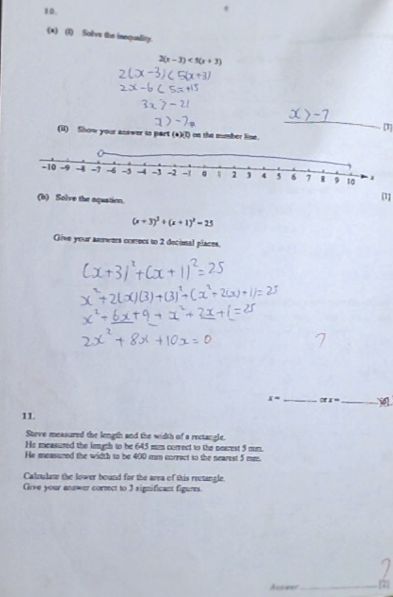
Inequalities
• Solve like equation

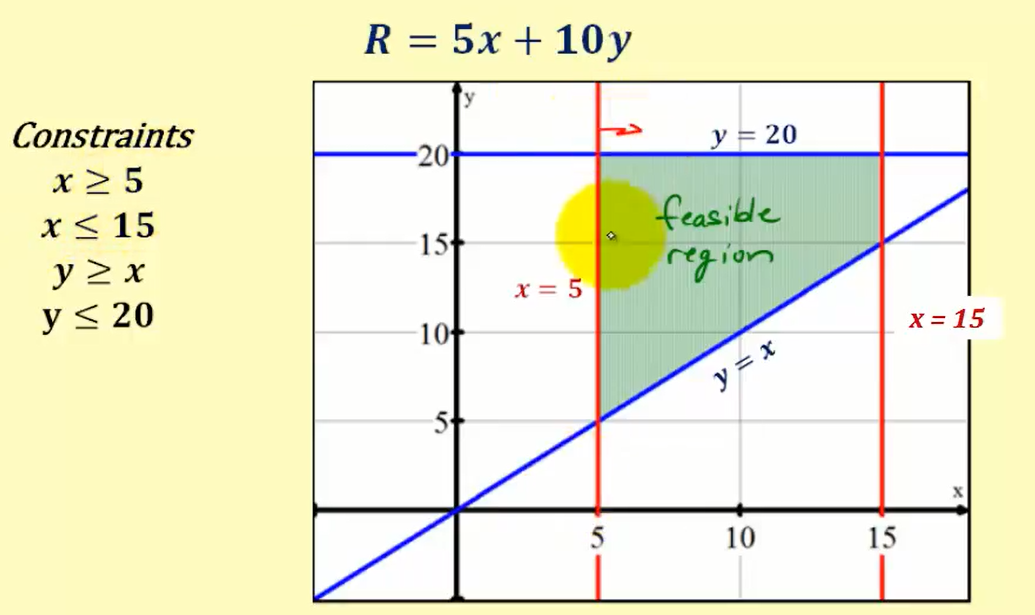
Linear Programming
- Use broken line for (<,>)
- Use solid line for (≤,≥)
- Express in the form 𝑦 = 𝑚𝑥 + 𝑐
- Draw straight line graphs
- Shade the wanted/unwanted region
- after all the inequalities are plotted, the shaded/unshaded region will be the solution
- For example:
Mensuration
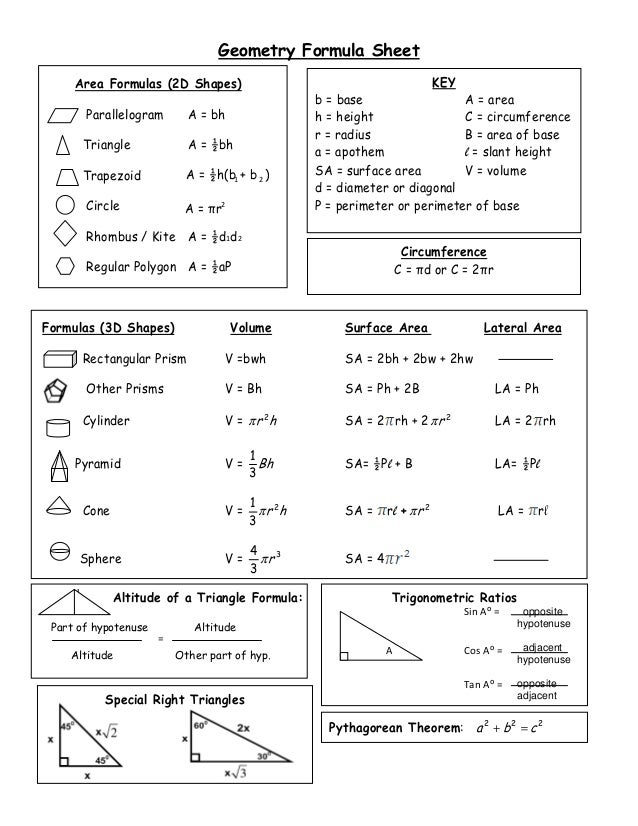
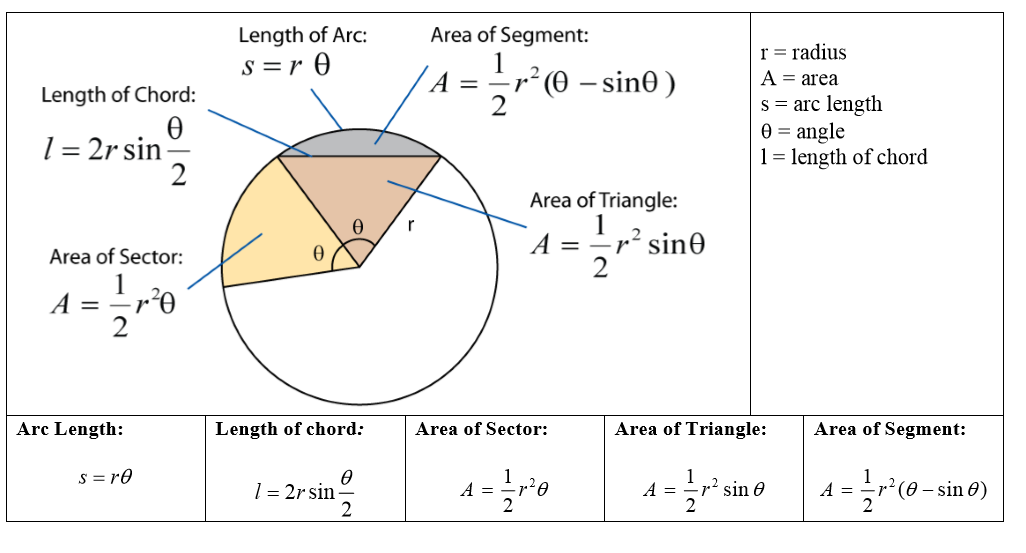
Circle Theorem

Geometry
Pythagoras Theoram:
For all the right angled triangles “the square on the hypotenuse (c2) is equal to the sum of all the squares on the other two sides (a2 + b2 ).
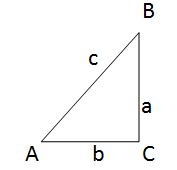
c2 = a2 + b2
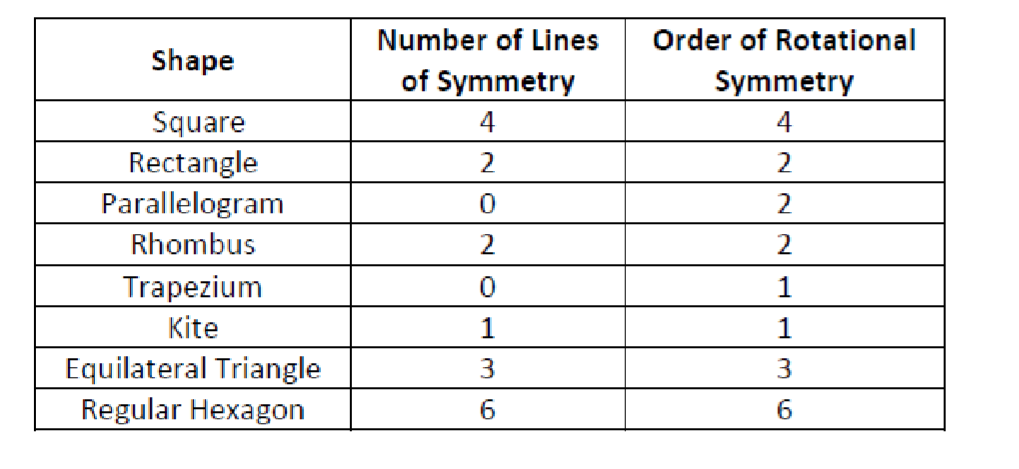
Symmetry
A line of symmetry divides a two-dimensional shape into two congruent (identical)
A plane of symmetry divides a three-dimensional shape into two congruent solid shapes.
The number of times shape fits its outline during a complete revolution is called the order of rotational symmetry.
Congurency:
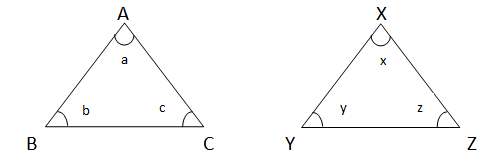
Two geometric figures are congurent, if they are of the same shape and size.
AB =XY ∠a = ∠x
BC = YZ ∠b = ∠y
AC = XZ ∠c = ∠z
Tests of Congurency:
- Side Side Side (SSS) – all sides are equal
- Angle Angle Angle (AAA) – all angles are same
- Side Angle Side (SAS) – two sides and one angle are equal
- Right Angled – Hypotenuse – Side – one right angle and hyp & side equal
≡ – To denote “ is congruent to”
≢ – To denote “ is not congruent to”
Similarity:
When two figures are similar, they are exactl the same in shape but not in size.
Test:
- Equal corresponding Angles:
The angles of one triangle are equal to corresponding angles of the other triangle.
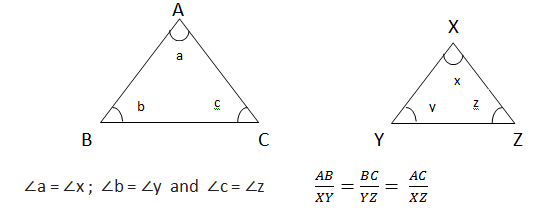
- Proportional Corresponding Angles.
- Two Pairs of Proportional Corresponding Sides with equal angles.
We right similarity as ( ~ ) i.e ΔABC ~ ΔDEF
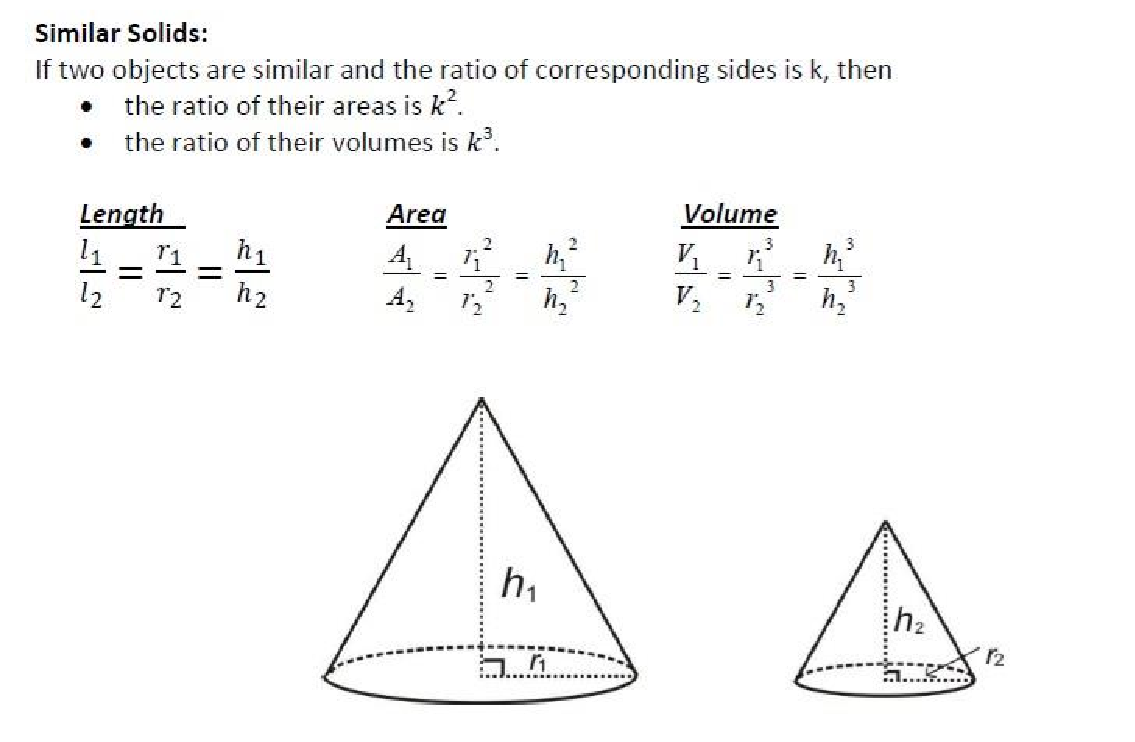
Ratios of Area And Volumes:
Trigonometry
Trigonometrical Ratios of Acute Angle:
All angles in a right angle triangle are acute angles. (between 0 to 90 degrees).
Sine:
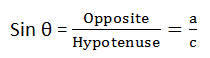
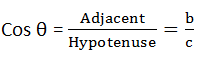
Cosine:
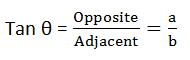
Tangent:
Tip to remember this SOH CAH TOA.
Example:
Q: Find the unknown values of :
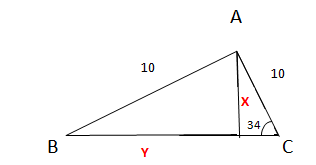
Sin 30 = Opposite / Hypotenuse
Sin 30 = x / 13
X = 6.5 Ans
Y2 + X2 = 102
Y2 = 102 – 6.52
Y = 7.60 (Ans)
Trigonometrical Ratios of Obtuse Angles:
The trigonometric ratios of an obtuse angle (between 90 and 180 degree) can be expressed in terms of the adjacent acute angle that lies in the same straight line.
Area of Triangle:
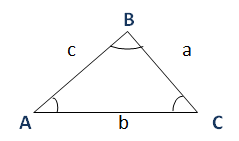
For a known right angled triangle with any two sides given and the area.
Area = ½ ab sin C
Area = ½ bc sin A
Area = ½ ac sin B
Sine Rule:
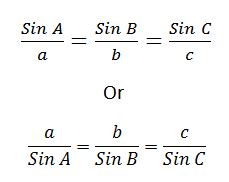
It can be used when:
- Two angles and one side given.
- Two sides and one non-included angle given.
Cosine Rule:
a2= b2 = c2 – (2bc cos A)
b2= a2 = c2 – (2ac cos B)
c2= a2 = b2 – (2ab cos C)
It can be used when:
- Three sides are given.
- Two sides and one angle is given.
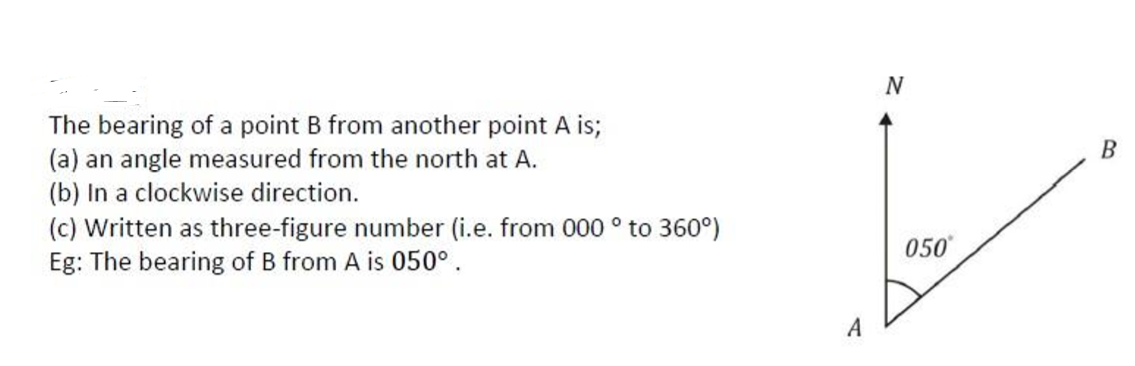
Bearing
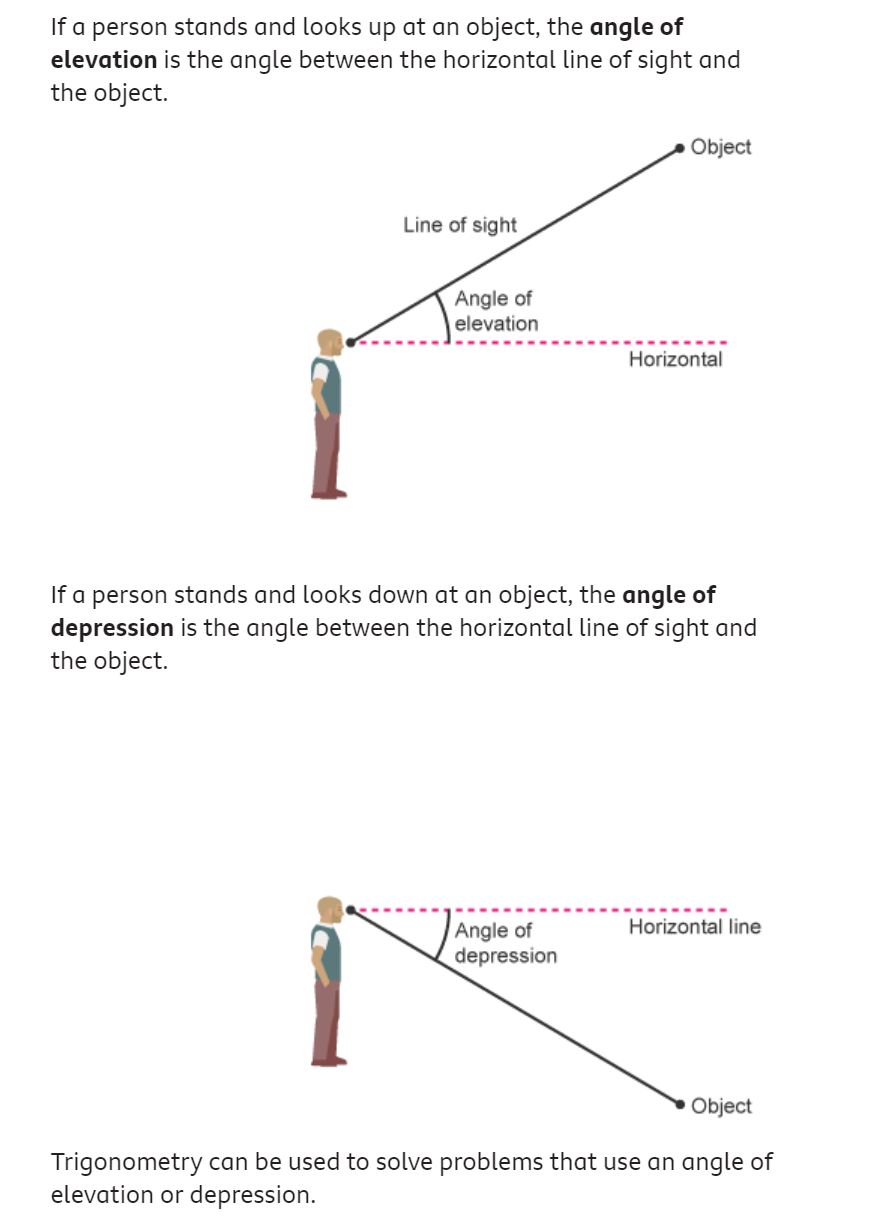
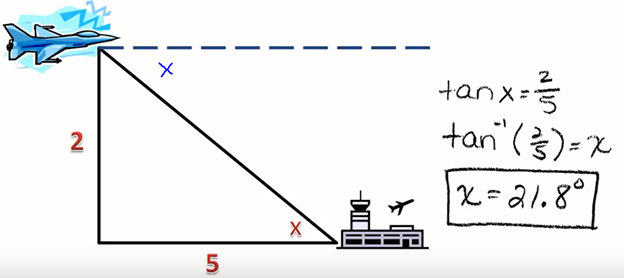
Angles of elevation and depression
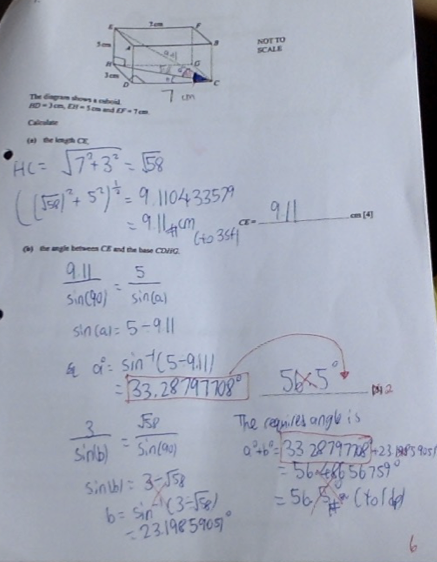
Three-dimensional problems
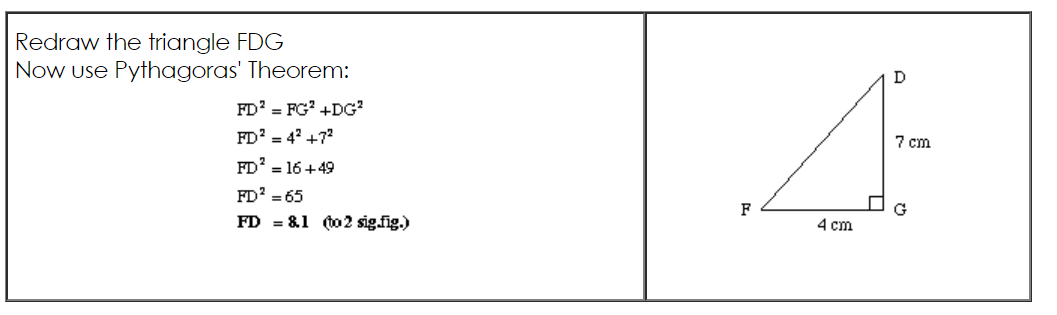
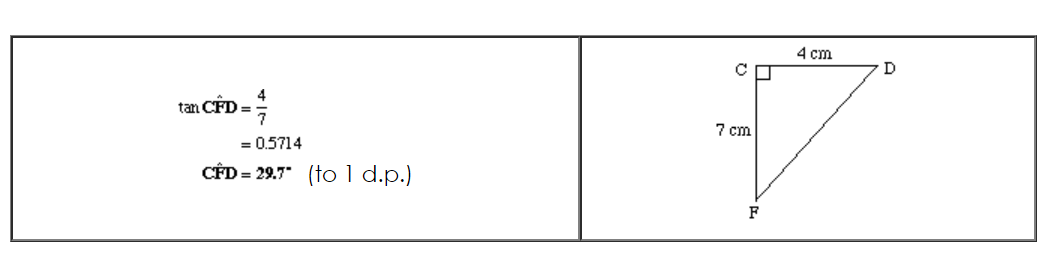
When a three-dimensional problem has to be solved, the best way is to try and isolate and redraw the triangles involved.

To find the length of FD
To find angle CFD
Redraw the triangle CFD
Now use SOH/CAH/TOA
GRAPHS
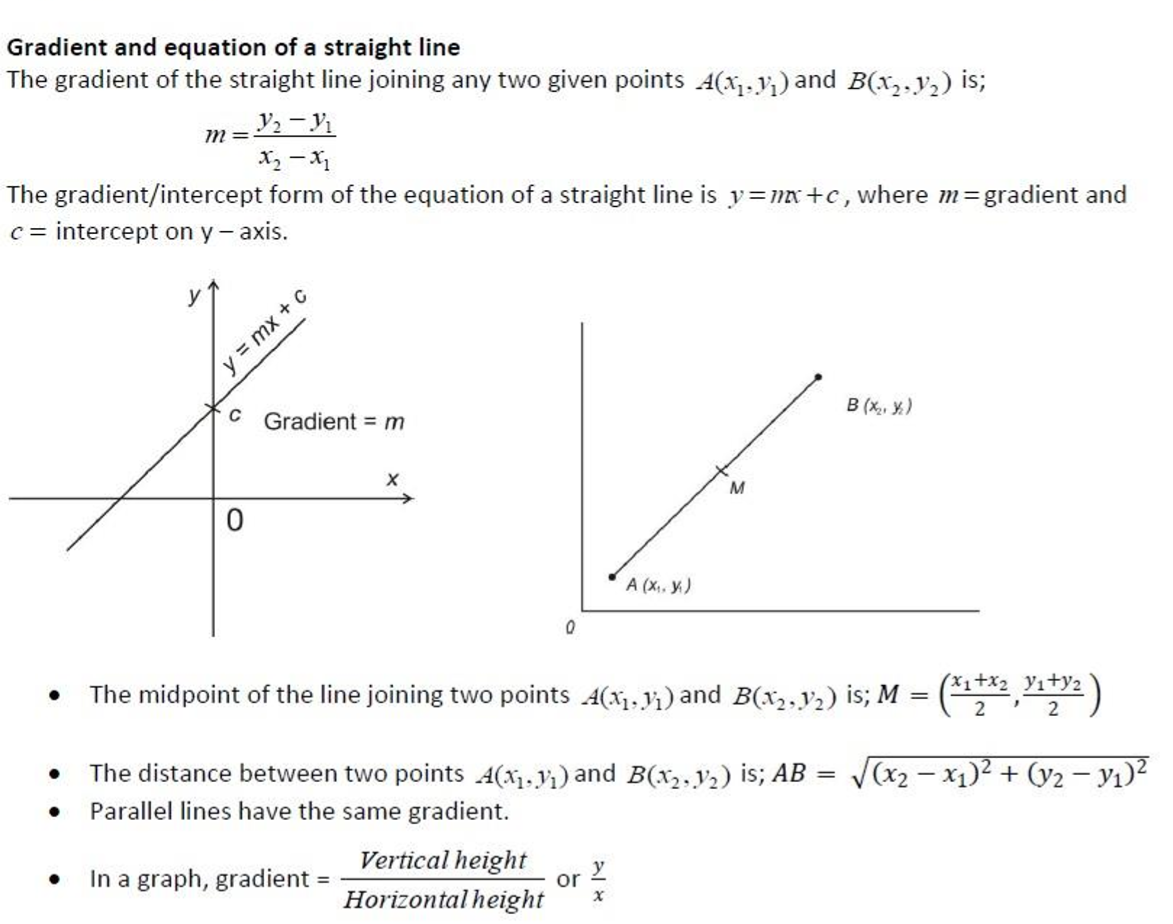
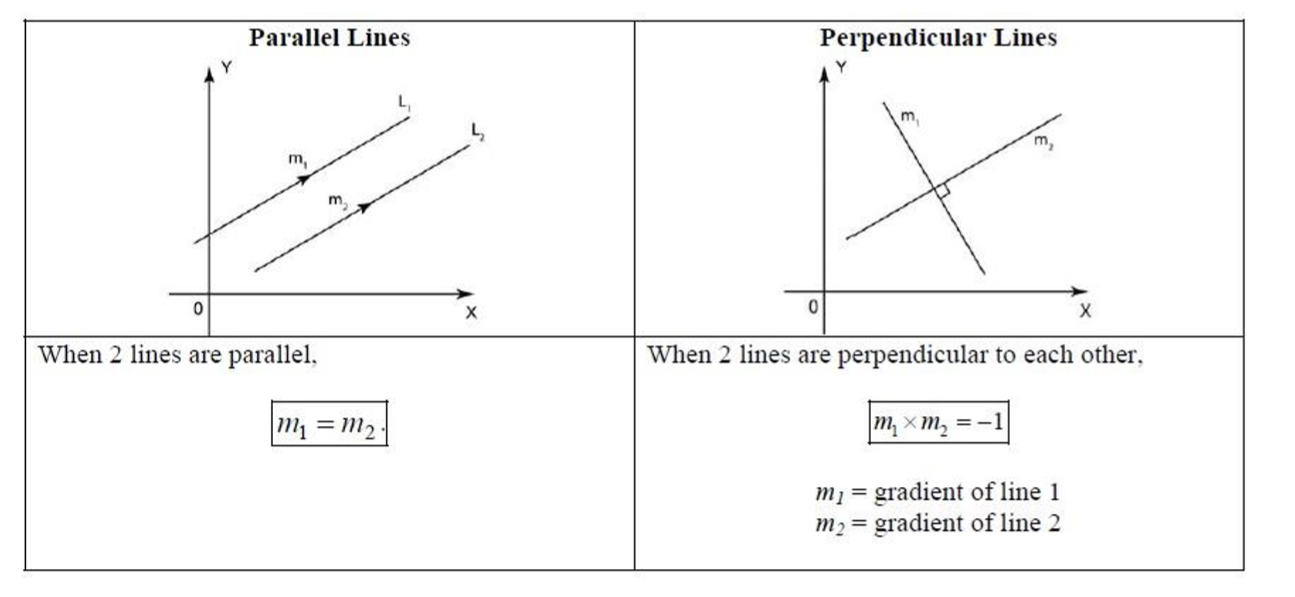
Gradient of Curve
To find the gradient of a curve, you must draw an accurate sketch of the curve. At the point where you need to know the gradient, draw a tangent to the curve. A tangent is a straight line which touches the curve at one point only. You then find the gradient of this tangent.
Example
Find the gradient of the curve y = x² at the point (3, 9).
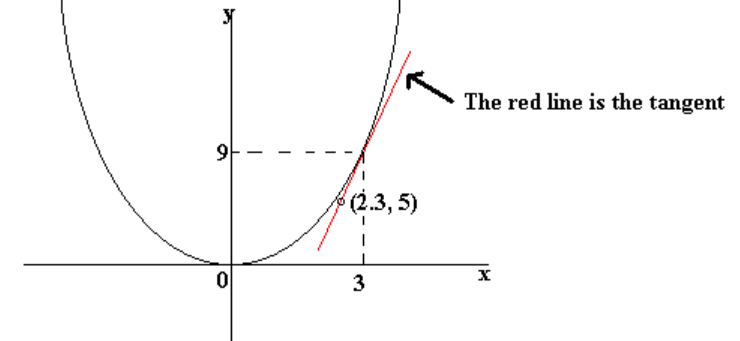
Gradient of tangent = (change in y)/(change in x)
= (9 – 5)/ (3 – 2.3)
= 5.71
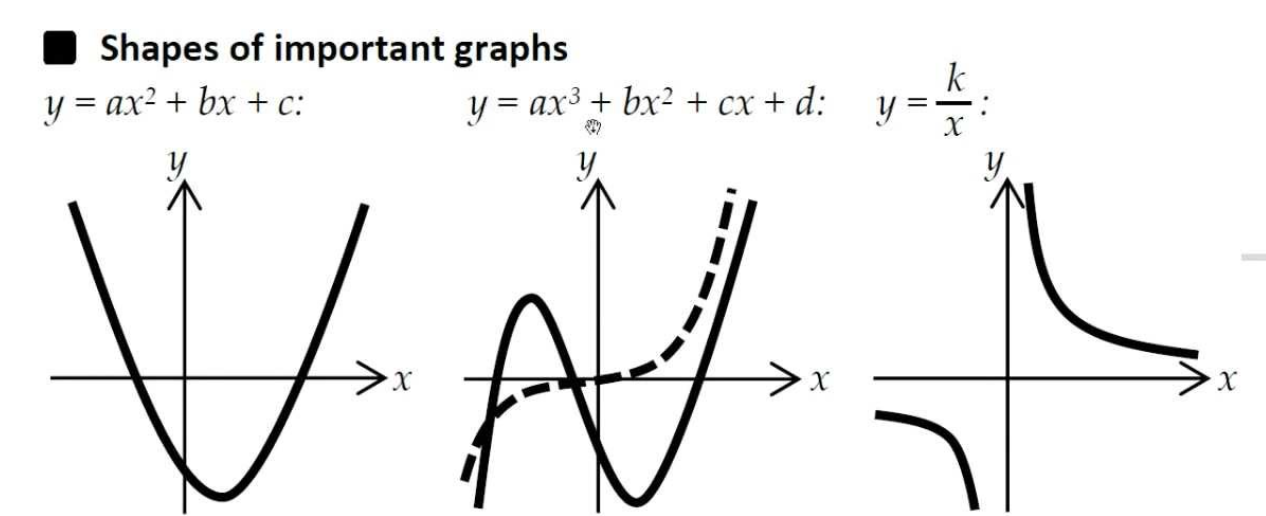
Sketching Graph
Graphical Solution of Equations
If we are given any quadratic graph: y = ax2 + bx + c
We can solve any quadratic equation: Ax2 + Bx + C = 0
by drawing only a straight line
We begin with: Ax2 + Bx + C = 0
Divide by A and multiply by a, we get:
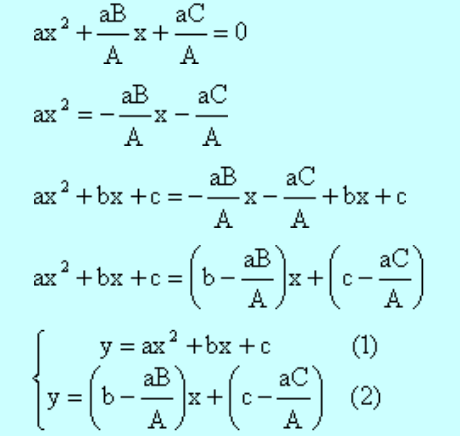
(1) is the given quadratic graph and (2) is the straight line graph you need to draw.
The intersection(s) of these two graphs is/are the root(s) of the equation:
Ax2 + Bx + C = 0.
Note: If there is no intersection point, the equation: Ax2 + Bx + C = 0
has no real roots.
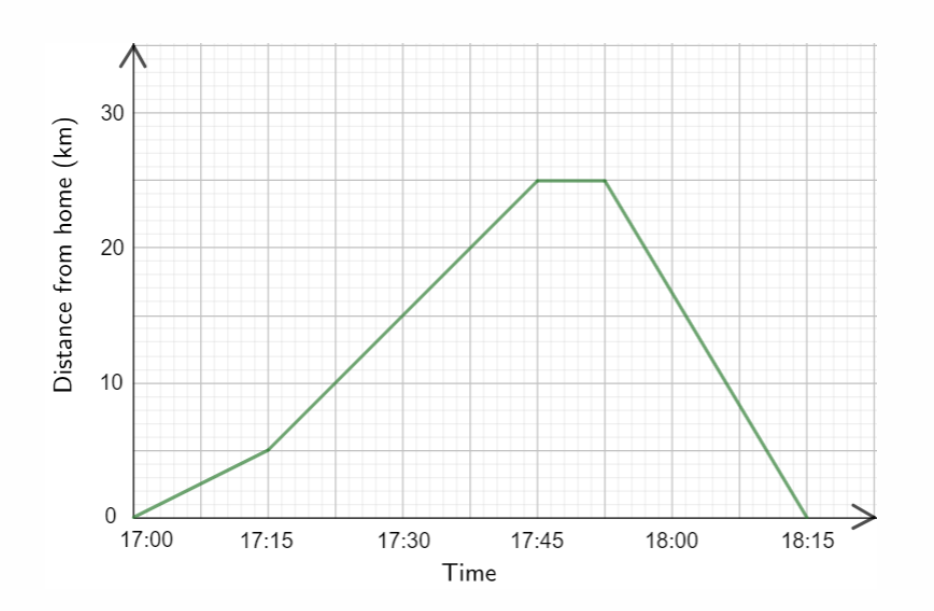
Distance-time graph
The gradient of a distance-time graph represents the speed.
For example:
Between 17:15 and 17:45:
Gradient = (25-5)/0.5=40km/h
Speed-time graph
The gradient of a speed-time graph represents the acceleration. The area between the curve and the x axis of a speed–time graph represents the distance travelled.
For example:
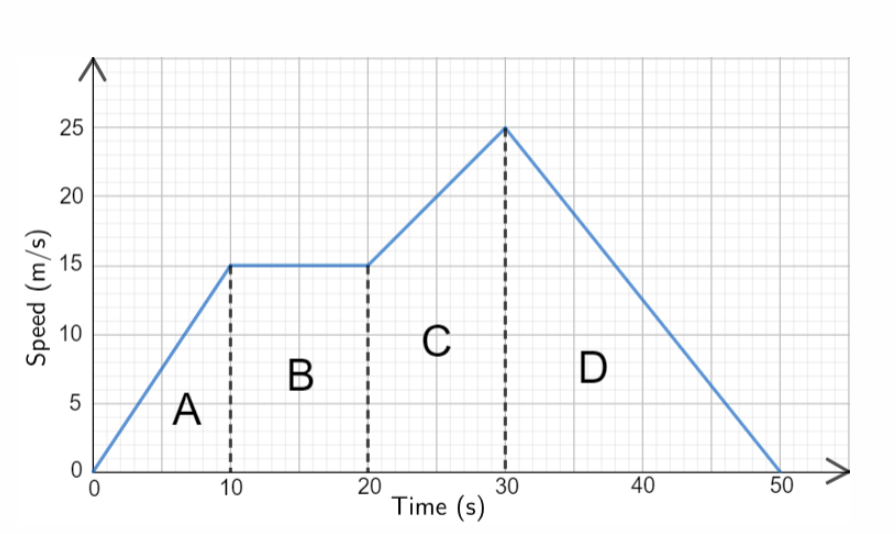
Distance travelled = Sum of areas A, B, C and D
= 75+150+200+250=675m
Maximum acceleration occurs from 0 to 10s
gradient= (15-0)/(10−0)=1.5m/s2
 TheMathOverload