A Hottie K who teaches with passion makes a difference.
NEVER take such teachers for granted!
SECTION A (Go back to your first DF about “Are you Mr Bean?”, and kindly reflect upon our JC1 journey and please re-answer the question. Kindly post your former and new answers (kindly include the dates).)
Original response (due 20 July 2020):
Title: You reap what you sow.
No, I am not Mr. Bean. Cheating is tempting, but it is the theft of other peoples’ hard work and efforts. At the end of the day, you may be lucky for once and get away with it; but it won’t get you anywhere in the long run.
New response (completed 28 May 2021)
Title: You reap what you sow.
No, I am still no Mr. Bean and it is still tempting to cheat, especially when my outputs don’t commensurate with the efforts put in at times. But I still like to think that although time is a test, my values don’t change over time. And I would continue to stick to diligence and perseverance as my motto in life.
SECTION B (3 significant life/math lessons learned from Kichan in our 3 years of academic and after-school life.)
Don’t wait for the teacher to explain concepts, always explore on our own first. Keep on trying and exploring.
MAAHL is hard.
A good teacher is what it takes to make a hard subject enjoyable to study.
SECTION C (3 unforgettable moments with Kichan (academic or non-academic stuff).)
Those times in Secondary levels when we have to run to other classes when Mr Kichan ran over time for his math class.
Super long online SISMO meetings
All the “amazing” moments he has given us in all the “Amazing tests” 🙂
SECTION D (3 words to best describe your 3 years journey with Kichan.)
Passionate, Meaningful, Mathematical. (if one more word is permitted, then it would be “green”.)
Singapore School Mathematics Olympiad (SISMO) is a student-organised online mathematics competition, led by the ever-so hardworking and passionate JC1 Mathletes Committee of SIS Kelapa Gading for the levels Junior to Advanced. In this year of 2021, despite the raging global COVID-19 pandemic which posed not only as a health hazard to hold the competition at a physical place, we still decided to take the initiative and hold this event online instead of chucking SISMO 2021 aside in the face of the never-ending list of challenges to be dealt with.
The Planning Stage
A couple of days before Term 2 ended (in December 2020), 2 math lessons were sacrificed (more math lessons are later sacrificed in Term 3) to plan for SISMO 2021. As a class, we met over Zoom to discuss the delegation of roles and responsibilities for the upcoming SISMO 2021 event. During the meeting, when it was called to have a group picture with the list of roles beside, my camera decided to turn black. My camera turning black exactly at this precise moment thankfully masked my expression of fear and worry, not just for myself but for my classmates as well, in juggling this mammoth-sized project with the already-daunting school assignments.
Figure 1: The planning stage.
Role and Responsibilities
As stated in Figure 1, my responsibility is to serve as the Advanced Level Coordinator. I had a fleeting burst of ecstasy because ‘Advanced’ simply sounded better compared to ‘Junior’ or ‘Intermediate’ in my opinion.
The Long, Dreaded List of Responsibilities which I readily accepted:
Save 43 advanced participants to my contacts, and add all of them into the Advanced Level Participant Whattsapp group where information regarding SISMO would be spread.
Come up with contingency plans (if unexpected events occur during the actual competition day)
Make introductory speech for Advanced participants in separate breakout room (in English).
Invigilate the Advanced participants during the actual competition tests through Zoom (cooperated with DOC to catch one cheater, hooray!).
Send 23 personalised emails containing certificates to winners ranging from merit to platinum.
Attend all internal Zoom meetings for discussion regarding SISMO on a regular basis (never underestimate this task, the average meeting clocks up at least 3 hours).
Juggle SISMO preparation with homework, assignments, class tests.
There are probably a couple more but I can’t remember the rest. Anyways heard from the DOCs’ that this workload is simply a drop in the ocean compared to their responsibilities. By the way, Responsibility #7 applies to everyone taking part in SISMO preparation, not just me.
Technical Meeting
First, we had a technical meeting simulation involving only those involved in the Advanced category, to make sure everyone is well-prepared for the actual technical meeting (February 27th). To be honest, the technical meeting simulation was chaotic since not everyone was fully aware of what needs to be done.
During the actual technical meeting (and the simulation as well), I had to know my lines while the Director of Curriculum translates my speech into Bahasa Indonesian since I can’t speak. Also told during the technical meeting simulation to say my lines with more emotion, instead of being monotonous and robotic (I don’t bother remembering who said that, maybe the whole class).
Figure 2: Technical meeting simulation final moments – rounds and rounds of rehearsing, all the hard work will eventually pay off.
Figure 3: During the simulation. One of my classmates succumbed under pressure, hands over head with a painful smile (Hang in there!).
Workshop
The Workshop (11:30-13:00) is a mandatory session to brief participants about how the actual competition event would be, and also exposing them to some practice questions (so they wouldn’t be caught off guard during the actual competition).
Figure 4: In the middle of a question drilling and explanation session during the workshop.
Actual Competition Day
Tasked to arrive at school at 5:50. Arrived in the nick of time. Latecomers frustrated those who arrived on time.
Participants are admitted into the Zoom meeting at 8:00. However, only participants who adhered to the (unique code – full name) naming convention are allowed to be admitted, so unfortunately the ‘admit all’ button could not be used.
Took attendance during welcome speech, pleasant to see majority of the advanced participants joining this event.
In the Advanced level breakout rooms (separate rooms allocated for each level where test is conducted to make invigilating easier), I made a list of participants who did not adhere to the camera-angle rule (show face and workspace) and warned them.
Figure 5: Silence reigned. Nail-biting tension lingers in the online arena as participants pit against each other, the battle of the brains, under the close scrutiny of the Advanced level coordinator (I wonder who) through Zoom, and the Director of Curriculum monitoring participants from the online exam platform.
At the end of the Open-Ended and MCQ rounds of the preliminaries, the top 3 scorers will proceed to the much-awaited Lightning Round. Only 1 participant would emerge victorious as the platinum winner, the rest still reserve their spot in the Gold category even though they lost the Lightning Round.
Figure 6: The official start of the Lightning Round.
Figure 7: Lightning Round Challengers. Go everyone, I was rooting for everyone! All the best!
Post SISMO Final Moments
Alas, 6th of March had passed, and I had passed out as well (not sure about my fellow classmates though, my best regards to them). Even after the competition, more work still begs to be done. For me, I had to send personalised emails containing their respective digital certificates to the 23 advanced level awardees, ranging from the merit certificates to the one and only platinum certificate.
Evaluation meetings followed up at rapid succession, to reflect upon the ups and downs of this event – areas of improvement. Even though there were some hiccups during this grand event, I was sincerely thankful that the past mistakes were condoned, accepted, and forgiven for.
Any Last Words?
Despite taking up Math lessons for SISMO preparation, I appreciate our Math teacher for the efforts in making up for the lost time, by conducting his classes well despite at a fast pace.
In a nutshell, SISMO 2021 was a blazing success! Positive feedback from participants kept streaming in, the event in general proceeded smoothly, and the profits earned from this event were donated to the Pondok Kasih Agape orphanage. In spite of the rough challenges faced, all efforts were channelled towards a good cause (charity), and on a deeper level, contributing towards SISMO accounts for the Semestral Assignment grade (worth 30% of final grade).
However, let’s look at SISMO 2021 at a positive light, a smashing success. The author of this blogpost is kind enough to send his best regards to the next JC1 cohort in organising the SISMO 2022 event in the not-too-distant future ahead!!
Hello, my name is Lee Tze Shawn. One of my subject I have chosen for the IB syllabus is Maths Analysis and Approaches Higher Level (MAAHL). MAAHL is a very challenging subject but I will try my best.
Lev Vygotsky’s Theory
Vygotsky, a Soviet psychologist, known for his work on psychological development in children believed strongly that “learning is a necessary and universal aspect of the process of developing culturally organised, specifically human psychological function” and community plays a central role in the process of “making meaning.” Hence Vygotsky claimed that culture/language plays a powerful role in shaping thought and cognitive development varies across cultures/languages. Vygotsky defined the Zone of Proximal Development (ZPD) as the gap between our pre-existing development and what we can accomplish with the help of others, usually the More Knowledgeable Other (MKO) who are people with higher learning capacity and have more knowledge than the students. In addition, he purports that proper instruction and guidance from the MKO helps improve a child’s ability through the ZPD as he learns and remembers new skills.
The IB’s “Approaches to Learning” include:
Thinking Skills: The ability to creatively and critically analyse, apply, evaluate, synthesise, conceptualise, contextualize, reason, and solve problems.
Communication Skills: The ability to produce and interpret messages effectively.
Social Skills: The ability to participate and collaborate with others whilst showing awareness and respect for other cultures, varying points of view, and individual differences.
Research Skills: The ability to determine the extent of information needed, locate and access information, organise and evaluate information, and use and share information effectively, efficiently, and ethically.
Self-management Skills: The ability to set goals, manage time and tasks effectively, and manage your state of mind, self-motivation, resilience, and mindfulness.
How Lev Vygotsky’s Social Learning Theory is Related to IB’s “Approaches to Learning”
Lev Vygotsky’s Social Learning Theory is related to the IB’s “Approaches to Learning” in a couple of ways. Firstly, Lev Vygotsky’s Social Learning Theory develops our thinking skills and communication skills because we are encouraged to seek the guidance of a More Knowledgable Other (MKO). Since two (or more) brains are better than one, the learner can use the newfound knowledge to think creatively and analyse them in greater depth. In addition during discussions with the MKO(s), the social and research skills are further enhanced as well. Similar to the communication skills, the learner can actively socialise with the MKO to clarify existing doubts, leading to more leads and motivation to conduct deeper analysis and further research. Lastly, the self-management skills of the learner are improved because the task is broken down into smaller achievable tasks, and with the guidance of the MKO the learner is fuelled with more motivation to complete the task with the best of his effort.
Sequences and Series Toolkit
Three Investigations (and a Bonus video presentation!)
Investigation 1 (partner discussion)
Q1)
Done by hand, annotated using Microsoft Word.Generated using GeoGebra 3D Calculator.
Q2)
Q2 DOT 1 that my partner chose.Q2 DOT 2 that I chose.
Q3)
Q3 Edge 1 that I chose.Q3 Edge 2 that my partner chose.
Q4)
A 2D coordinate system specifies all points in the x-coordinate axis and the y-coordinate axis. A 3D coordinate system specifies all points in the x-coordinate axis, y-coordinate axis, and the z-coordinate axis. The difference between 2D coordinates and 3D coordinates is, there is one additional z-coordinate axis in 3D coordinates compared to 2D coordinates.
Q5)
Generated using GeoGebra 3D Calculator. The centre of the cube is labelled X (2,2,2).
Q6)
Generated using GeoGebra 3D Calculator. Length of OB.
√(4)2 + (4)2 = √32
= 5.656854249
= 5.66 cm (to 3sf)
Generated using GeoGebra 3D Calculator. Length of OF.
√[(√32)2 + (4)2] = √48
= 6.92820323
= 6.93 cm (to 3sf)
Q7)
Distance between Dot 1 and Edge 1
√(4-4)2 + (2-2)2 + (2-0)2 = 2cm
Distance between Dot 2 and Edge 2
√(2-2)2 + (0-0)2 + (4-2)2 = 2cm
Q8)
In my opinion, the understanding of 2D geometry is the building blocks to understanding 3D geometry. By starting out with 2 axises in 2D geometry, it helps develop the necessary visualisation and spatial reasoning skills to further proceed to 3D geometry since there is an additional z-coordinate axis.
Investigation 2
Q1) Let the area of the circle be A.
A= πr2
dA/dr = 2πr
Q2: Let the volume of a sphere be V
V = 4/3 πr3
dV/dr = 4πr2
Q3) In the case of squares, the first derivative of the area [of the given square, which is (2r)2 = 4r2] is equal to its surface area [8r]. In the case of cubes, the first derivative of the volume of the cube is equal to its surface area.
Q4)
Let the area of the square be A.
A = (2r)2
= 4r2
Let the volume of the cube be V.
V = (2r)3
= 8r3
Q5)
Let the perimeter of the square be P.
P = dA/dr = d(4r2)/dr
= 8r
Let the surface area of the cube be SA.
SA = dV/dr = d(8r3)/dr
= 24r2
Q6) The relationship between the circumference and area of a 2D object is, the circumference is the first derivative of the area. The relationship between the volume and surface area of a 3D object is, the surface area is the first derivative of the volume.
Investigation 3
Q1)
Q2)
Circumference: 2πr =2π(2.5cm) = 5π cm
Q3)
Central angle in degrees
Length of corresponding arc (cm)
360 °
5π
180 °
2.5π
90 °
1.25π
60 °
56π
45 °
0.625π
30 °
512π
Q4)
Radian is an alternate unit to measure angles. We can write radian in terms of degrees, where 1 radian is 180π°.
Q5)
Central angle in degrees
Length of corresponding arc
360 °
2πr
180 °
πr
90 °
(π/2)r
60 °
(π/3)r
45 °
(π/4)r
30 °
(π/6)r
Q6)
s=rθ
Q7)
The ratio of the arc length and the radius have the same unit of measurement, so the units cancel out.
Group Video Presentation of Toolkit
A video presentation of the group toolkit titled ‘The Sound of Mathematics’. Enjoy!
Partner Discussion of Developing Inquiry Skills
Prior to the solving of this question, I had a zoom meeting with my partner as the both of us collaboratively analysed and discussed how to solve this question. One difficulty we encountered is, the variable ‘a’ is purposefully omitted in the question to stump us students, but included in the formula Volume = (4/3)(π)(r)2(a). Nonetheless the both of us found another formula on the internet and attempted to solve the question.
Formula of volume of a spheroid: 4/3 (π)(Vertical radius) * (Horizontal radius)2
Vertical radius (c) = 6m/2 = 3m
Horizontal radius (a) = 8m/2 = 4m
Volume of spheroid = 4/3 (π)(4m) * (3m)2
= 48π m3
= 150.7964474 m3
= 151 m3 (to 2sf)
Real Life Applications of Numbers, Algebra, Geometry and Trigonometry
Real Life Application of Numbers and Algebra: Calculating the shopping bill.
Let the cost of an Economics Textbook be $w.
Let the cost of a Physics Textbook be $x.
Let the cost of a Chemistry Textbook be $y.
Let the cost of a Maths Textbook be $z.
My total bill can be expressed algebraically as: (1)($w) + (1)($x) + (1)($y) + (1)($z).
2. Real Life Application of Geometry: Mapping. Mapping is essential in jobs like surveying, navigation and astronomy. In addition medical professions benefit from geometric imaging, such as CT scans and MRIs.
3. Real Life Application of Trigonometry: Flight engineering. Trigonometry helps predict the behaviour of plane travel and landing given the variables of plane speed, distance travelled, and the direction and speed of the wind. For example, if a plane is travelling at 300 mph, 45 degrees Northeast, and there is a wind blowing due south at 25 mph. Solving for the third side of the triangle using trigonometry will lead the plane to the right direction.
International Mindedness
Waclaw Sierpinski (1882 – 1969) invented the Sierpinski’s triangle and it was named after him. Waclaw Sierpinski made important breakthroughs in the field of fractal dimensions, which lead to the discovery of the well-known Sierspinski’s triangle (analysis of this can be seen above).
Waclaw SierpinskiSierpinski’s Triangle
5 IB learner profiles
Communicators: Discussion with partner allowed the both of us to express our views, collaborate effectively and accept each other’s point of view and analysis.
Principled: Citing the sources used for this assignment is a reflection of the IB learner profile of being principled – acting with integrity and honesty, with a strong sense of justice and fairness.
Risk-Takers: During the discussion with my partner, we had to take some risks to get started, then slowly eliminating conjectures that doesn’t make any sense at all while acquiring new knowledge and replacing initial doubts.
Balanced: Wise time management (also known as not procrastinating) to complete all other assignments that the average IB student is flooded with, including this one while still putting in dedication and effort.
Thinkers: Being good Communicators and Risk-takers isn’t enough. My partner and I both analysed how our ideas could relate to the solving of the investigations, which lead to the completion of this eJournal assignment.
Due to the global pandemic of Covid-19, for health purposes, instead of going to school as per normal, e-learning was conducted. Classes were conducted through zoom.us, a video conferencing application; teachers share their screen to the whole class, engage in interactive classes. Teachers also put up assignments on Google Classroom. Honestly, I felt even more overloaded when I engage in e-learning compared to school days as per normal – at first there was barely any homework; but as the days passed, we were flooded with homework. Hopefully the COVID-19 pandemic will end soon, and all return to normalcy. Time sure flies, it is now Week 3 of e-learning. Have gotten used to the endless streams of homework. I guess the homework is still manageable after all. In a nutshell, I am nevertheless thankful that my school conducted e-learning during this time of crisis. This ties back to the quote above.
EMaths
We did multiple quizzes about sequences and patterns, then I recalled what my Maths teacher mentioned about EMaths containing some topics from AMaths. Before I quickly dismissed this, but only when I noticed that the quiz contained Geometric Sequences (not in the EMaths syllabus), I knew that it was no joke. Thankfully I have studied this before in AMaths.
Teacher gave us past Theory of Knowledge (TOK) questions to ready us for IB, and we have to do seven of them.
Each Question 100-200 words
Nothing much to say. Better to be have an idea how IB life will be like earlier than have a nasty surprise later. (Coming into IB unaware, unprepared, overloaded with work is what I mean by ‘nasty surprise’)
Computer Science
CompSci Class group photo!
As a class, we will be creating a video on how to reduce the spread of the COVID-19 pandemic soon. To all readers: Stay strong, stay healthy, all the best!
AMaths
Learnt how to apply AMaths concepts in business and economics – how to use differential calculus to calculate how many units of an item are needed to be sold to earn maximum profit, at the lowest inventory cost.
A video about profit maximisation using differential calculus:
Before this SISMO event took place, we experienced some flash floods (Jakarta). In the first place, this event could even have been CANCELLED (ignore that, that thankfully never happened) due to flooding and safety reasons. Heavy traffic on the way to the venue, lucky enough to reach there on time.
Ice-Breaker Games
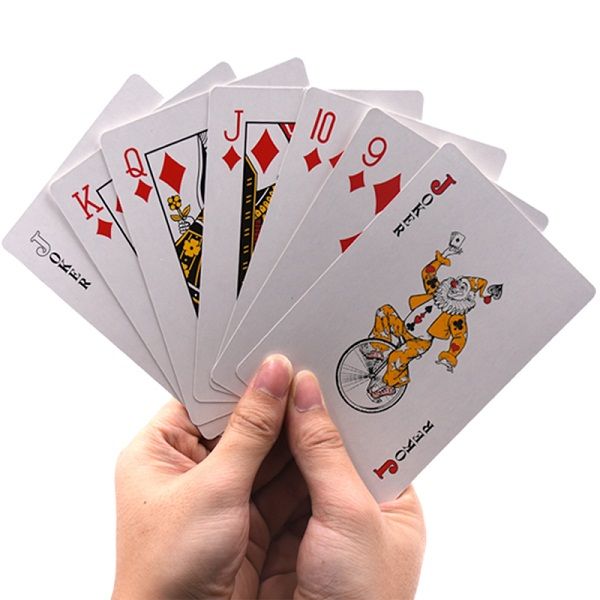
To kick start this monumental event (the very first time SIS Kelapa Gading hosted a Maths Olympiad event), everyone entered the hall (obviously after registration, because I did not mention that under the “Registration” part in this blog), sat at our seats respectively and were challenged to play a game of “24” (given a deck of cards, lay 4 on the table; add, subtract, multiply or divide these 4 cards to achieve a result of 24 to win). No big achievement even though I won.
Round 1
Quickly after the game of “24”, round 1 instantaneously begun. The MCQ paper. A total of 15 questions to be completed in an hour. Very surprisingly, I could answer a few (!!).
Round 2
1 hour passed in the blink of an eye. Time sure flies. A 30 minute break before Round 2 commerced. Sadly, this time no more MCQ (all open-ended questions). Based on my deep analysis and calculations, there is a 25% probability of answering an MCQ of 4 choices correctly. However, the probability of answering an open-ended question by fluke is DEFINITELY slimmer than 25% for sure.
At last, the torture(s) is/are over. Time to catch a breather. Time for a Kahoot Quiz. By now, my brain is sick and tired of Maths (competitive Maths) I was mentally exhausted. During the Kahoot Quiz, the system suddenly glitched out, and my score remained at 0 (so did some of my friends). Never mind about that. At least I took this chance to unwind from all the stress.
Awardings
A memorable group picture… A-Maths Gang!!Very unexpected… Quite good for a first-timer, I guess. Went home, immediately popped open a bottle of wine, got myself drunk and celebrated all nightGroup Picture!!
Question Analysis
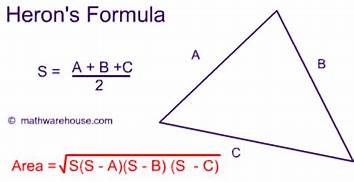
MCQ Round Q3) Let triangle ABC have sides a=4, b=13 and c=15. Find the area of the triangle.
A. 96
B. 24
C. 48
D. 32
Answer is B, using Heron’s formula.
IB Learner Profiles
Thinkers – This SISMO experience taught me that it is a critical skill to learn how to think; not just squarely and rigidly, but strategically, out of the box. I know that if I think rigidly, I would be nowhere near solving the questions, so I took a different approach and started thinking in a more critical and logical manner (the sudden switch of mindsets from square in-the-box thinking to a more lively, creative approach paid off).
Being Balanced – The SISMO questions are insanely difficult (don’t take my word for it, it may just be my lack of experience as a first-timer amateur), and I know I don’t have all day to dilly dally and ponder over how to solve every question systematically. Hence, before attempting the questions in order (which means getting myself stuck at the first few questions for a long enough think – and even possibly still not be able to solve any of them); I scrutinised through the whole paper and did a few that I ACTUALLY could solve before haphazardly answering the rest. I hence leant how to balance my workload and manage time better.
Risk-Takers (positively) – Just imagine: if I did not exercise this IB value during this event, I would have left 90% of the paper BLANK . Knowing that I have nothing to lose (wrong answers will not be penalised), I took the risk, attempted all answers; and hoped for the best. Definitely a value that I have learnt and will never forget. We only live life once – don’t be afraid to take the plunge.
“The true epicness and beauty of patterns is infinite, never ending.”
The egotistical author of this blogpost (trying to act smart again)
INTRODUCTION
This blogpost begins with a “hit the runway” activity (try to construct a line that is in line with the runway given to ensure the safety of all passengers, which involves the topic “straight line graphs” and “y=mx+c intercept form”); and the next two investigations purely revolves around fractals.
Part A: How to Land a Plane
Task 7
How I saved the life of all the passengers
Step 1: Find the gradient of the line.I guess this is pretty self-explanatory.
Step 2: Find the y-intercept of the line, which is 3.1.
Step 3: Find the range of the line (how thick the runway is, from y1 to y2.) Range is shown in above screenshot.
Step 4: Find the step. (How much thegraph shifts upwards or downwards.) In this case, the step is 0. (That is what I input).
Step 5: Plane lands on the red line you have just plotted. Lives are saved. The outcome of this mission could have been much worse. Congratulations!
Area of snowflake = (2 . 81^2 . 3^0.5)/5 = 4546 cm^2 (to nearest whole number)
Iteration Number
Perimeter (cm)
Area (cm^2)
1
324
4546
2
432
4546
3
576
4546
From the table of results, we can conclude that the area of Koch’s snowflake is finite and will always stay the same, and its perimeter follows the pattern of 3 . 81 . (4/3)^n, while n = the number of iterations.
Therefore,
The total perimeter of the Koch’s snowflake after n iterations is:
The pattern I observed in relation to the number of green triangles:
The pattern I observed in relation to the length of one side of one green triangle:
The pattern I observed in relation to the area of each green triangle:
where n is the number of stages (for all three patterns).
All these patterns are arithmetic sequences, which uses n as the index.
Stage
0
1
2
3
4
5
6
Number of green triangles
1
3
9
27
81
243
729
Length of one side of one green triangle
1
1/4
1/8
1/16
1/32
1/64
1/128
Area of each green triangle
1
1/4
1/16
1/64
1/256
1/1024
1/4096
As the number of stages increases, the length of one side of one green triangle decreases by a factor of 1/2, and the area of each green triangle decreases by a factor of 1/4.
REFLECTION
Fractals play an integral part in our everyday lives, unbeknownst to some of us. For example, fractals are used to predict or analyse various biological processes or phenomena such as the growth pattern of bacteria, the pattern of situations such as nerve dendrites, etc. Fractals also depict the beauty of nature, such as snowflakes, mountain ranges, and even the terrifying electrical powers of lightning is an amazing real life application of fractals. In the process of completing this blogpost urged me to think out of the box, be creative; be innovative; and be more cognitive of my surroundings and everyday life. I have thus learnt the IB learner profiles of being a thinker, as it is paramount to equip oneself with the skills of thinking out of the box and applying critical thinking; being open-minded as there is an infinite trove of knowledge only waiting to be discovered; being knowledgeable, keep exploring, keep striving, keep on achieving greater heights.
Unforgettable Moments
Even though I cannot find a picture to upload under this much-awaited section, but I cherish every moment in the 2 year IGCSE program in Class 4I dearly, all of which that neither words or pictures are able to depict.
Matrices can only be added or subtracted if they have the same order of matrices. Here is an example where two matrices could not be added together. The same applies for subtracting matrices.
Matrices can only be multiplied if the ‘middle of the order of matrices’ are the same. For example, the above matrices have the order of (2×3) and (3×2) respectively, and the middle number 3 is the same, so these two matrices can be multiplied together.
Dividing matrices:
Actually, matrices cannot be divided. However, lets say matrix A can be obtained from matrix AB by multiplying AB with the inverse of A.
If the the scalar of enlargement is negative, for example -2, then the image would be the object rotated 180 degrees but 2 times smaller. If the the scalar of enlargement is a negative fraction, for example -1/3, then the image would be the object rotated 180 degrees but 3 times bigger.
Rotations
Turning around a centre of rotation. The distance from the centre of rotation to any side of the shape will always remain constant.
Now think about this … the value of sales for Monday is calculated this way:Apple pie value + Cherry pie value + Blueberry pie value$3×13 + $4×8 + $2×6 = $83
So it is, in fact, the “dot product” of prices and how many were sold:
We match the price to how many sold, multiply each, then sum the result.
In other words:
The sales for Monday were: Apple pies: $3×13=$39, Cherry pies: $4×8=$32, and Blueberry pies: $2×6=$12. Together that is $39 + $32 + $12 = $83
And for Tueday: $3×9 + $4×7 + $2×4 = $63
And for Wednesday: $3×7 + $4×4 + $2×0 = $37
And for Thursday: $3×15 + $4×6 + $2×3 = $75
So it is important to match each price to each quantity.
EXAMPLE 2
EXAMPLE 3
In geology, matrices are used in taking seismic surveys. They are used for plotting graphs, statistics and also to do scientific studies in almost different fields.
While completing this blog, I learnt the IB value of being open-minded as the real life applications of matrices were an eye opener to me, as I realise that many facts are yet to be discovered (outside the textbook). I also learnt the IB value of being a thinker as I realised my mind has to be flexible in remembering the different methods required such as multiplying matrices together.
The moment I arrived at the resort, I was enchanted by the stunning beauty of mother nature – all the lush greenery and peace, a far cry from the hustle and bustle of the city. Our first activity of the learning journey is to create signages to boost the tourism of the villa. We were given a huge signboard, and an example of what to write on each signboard. At first, I thought it was no difficult feat to finish this with my group in 2.5 hours, but we realized how wrong we were. Writing using paint on the wooden signage is a whole world of a difference compared to writing on paper – whats’ written there could not be erased and overlapped (like using correction tape or fluid). Our group tried our best, but my handwriting was simply a mess. Luckily our handwriting was still legible, or we would have to do another signage. Looking back at our “masterpiece” we all felt a sense of joy and accomplishment.
Me oblivious to the cameraas I continue writing on the signboard.
DAY 2
Kicker start the day at 3 am, waited 4.5 hours till breakfast. The first activity of the day is to complete the signages that we started the previous day. I tried my best, but the output wasn’t great and I nearly ruined it. We then had to carry our signages to the respective destinations, my shoulders ached a lot as a result due to the heavy signage. On the way back while walking downhill, I fell down. 5 seconds later I fell down again. Oops. Thankfully I broke both fall with both hands instead of scraping my knees.
The whole day was pretty uneventful till the evening when we went swimming. The slides were epic, and I even conquered my fear of heights and jumped straight into the pool from a height of around 3 metres. This experience taught me how to be a risk taker, as no pain equals to no gain. I don’t have the picture of myself jumping off the mini cliff, but the angle of depression from the cliff to the pool as I jumped was approximately 45 degrees; and the trajectory of the arc of my jump nearly formed a perfect quadrant? (Questionable)
DAY 3
Woke up at 6, had breakfast at 7.30. Did trekking after breakfast, very arduous and tiring, to a waterfall. The waterfall was splendid, mother nature at her best. ventured into the waterfall, had a field day in the icy cold water, until I slipped and fell in the water, soaking both my shirt and pants. My phone was in my pants, thankfully it was not damaged due to excessive “water absorption”. The next activity was the selfie swing. I was hesitant about completing the swing as I was afraid of heights, but I somehow mustered my courage and completed the swing. Throughout, I learnt the IB values of risk taking and being reflective as I recall the “harrowing” events when I somehow conquered my fears, and how to maintain this positive mindset at all times.
DAY 4 The first activity was to go to a local school to teach the students there. Unfortunately there was a language barrier, so I found it difficult to convey what I want to say to the students. Thankfully my teammates explained to me what was going on, and I tried my best to contribute. I also learnt a thing or two during the short but meaningful teaching experience. Next, we went to a village to learn how to make handicraft. I admit that I am horrible at it, but I still managed to complete it. Afterwards, we went to a paddy to do some farming. This arduous experience taught me that consuming rice is all too easy, but planting rice is the complete reverse of it. Finally, we went to an orphanage. The sight of the homeless children made me realise not to take things for granted, and treasure them dearly. After the amazing performances, it touched me to see the orphans leap in joy when they received our donations. Even a small donation on each and our part can go a long way in improving the lives of the less fortunate. Throughout this day, I learnt the IB values of being caring and open minded as we lend a helping hand to the less fortunate. This day was definitely the takeaway of this learning journey.
Repeated patterns, from big to small.Handiwork 2: An application of “parallel” and “perpendicular bisector”. NDTS.
The REAL life application of parallel lines. (not the handiwork I made above this picture). This is the real deal.Planting rice is hard work…The feeling of satisfaction when our efforts brought a smile onto an orphan’s face.
DAY 5
The final day of the learning journey. Started the day by visiting a coffee plantation. At the plantation, I observed the different spices used in making coffee, and the coffee roaster used. Next we tried some coffee tasters, and I was amazed by how the various spices mixed together produced such a rich flavour to the coffee. The next activity was shopping, which was quite uneventful as I just sat at the waiting area doing my calculus worksheet. Finally, we went to the airport to conclude our 1 week learning journey at Bali.
The coffee roaster.The Luwak catThe various types of spices used in making coffee. A myriad of patterns.
A Venn diagram is a diagram that shows all possible logical relations between a finite collection of different sets. These diagrams depict elements as points in the plane, and sets as regions inside closed curves. A Venn diagram consists of multiple overlapping closed curves, usually circles, each representing a set.
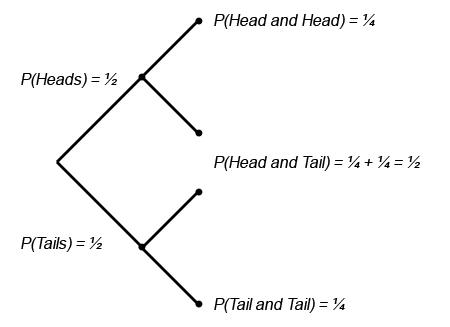
A tree diagram depicts the many different probabilities of an event, each branch showing the probability of each possible outcome. For example, when a coin is flipped, the outcome is either heads or tails. The tree diagram above shows the possible outcomes when the coin is flipped twice.
Representative houses are examples of sets. Here the people belonging to various departments have to sit separately from other departments. For example, the legal department and finance department dont sit intermixed with each other. It has the lower house and upper house called Senate, where only senior members sit whereas the juniors sit in the lower house.
As we all know that there are millions of galaxies present in our world which are separated from each other by some distance. Here, the universe act as a set.
Many politics analysts use the tactics of probability to predict the outcome of the election’s results. For example, they may predict a certain political party to come into power; based on the results of exit polls.
There is a probability of getting a desired card when we randomly pick one out of 52. For example, the probability of picking up an ace in a 52 deck of cards is 4/52; since there are 4 aces in the deck. The odds of picking up any other card is therefore 52/52 – 4/52 = 48/52.
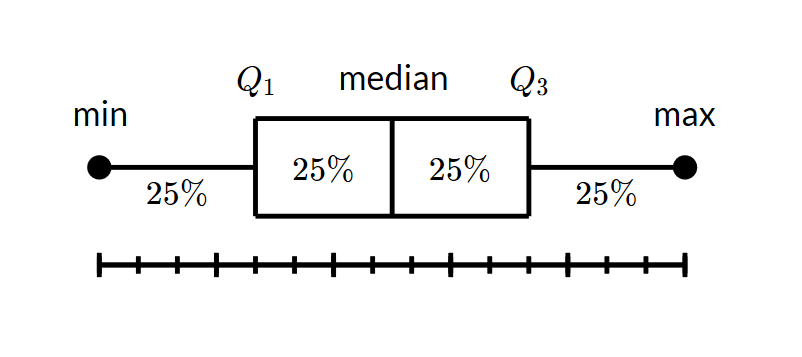
Above is a box and whiskers diagram. A box and whisker diagram is a way of summarising a set of data measured on an interval scale. It is often used in explanatory data analysis. The points needed to plot a box and whiskers diagram are the minimum and maximum points, the lower and upper quartile, and the median.
Box and whisker diagrams are ideal for comparing distributions because the centre, spread and overall range are immediately apparent.
In a box and whisker plot:
the ends of the box are the upper and lower quartiles, so the box spans the interquartile range
the median is marked by a vertical line inside the box
the whiskers are the two lines outside the box that extend to the highest and lowest observations.
How the frequency is distributed in a box and whiskers diagram.
Lower quartile (Q1): ¼(n+1)
Upper quartile (Q3): ¾(n+1)
Median (Q2): ½(n+1)
where n is the total frequency.
The “whiskers” of the diagram is basically the minimum frequency and the maximum frequency.
In the box and whiskers diagram, the position of the median (of the frequency) is where the middle line is drawn.
Outliers are the values that lie outside ( is much smaller than or larger than) most of the other values in a set of data, which is represented by a dot in the box and whiskers diagram.
Real life application 1: An overview of students’ performance in a test.
In this box and whisker diagram, the minimum mark a student received is 68 while the maximum mark a student received is 97. The lower quartile mark is 77 and the upper quartile mark is 93. The median mark of the test is 85.
Real life application 2: Comparing the number of computers sold by Store 1 and Store 2.
Store 2 has a higher maximum and minimum number of computers sold than Store 1. Moreover, Store 2 has a higher median and interquartile range than Store 1. Thus, it is evident that Store 2 had consistently sold more computers than Store 1.













 TheMathOverload